





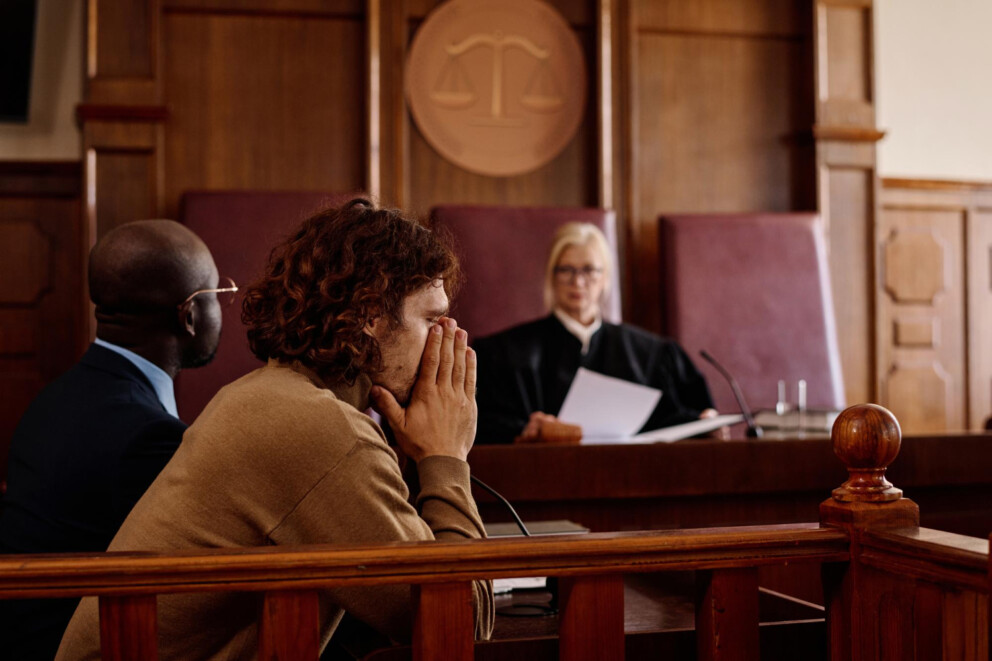
A retenir
- Arriving unprepared at a criminal court hearing can lead to irreversible mistakes.
- The court judges precise facts, and the situation is only taken into account if it is relevant to the decision.
- The wrong attitude or words can undermine the defendant’s defence.
- Misunderstanding the judgement can result in losing the right to appeal.
- The criminal lawyer acts as a guide to secure the procedure and the decision.
Many people discover a criminal court hearing without knowing the rules. Depending on the stage of the proceedings, the accused may appear after a simple summons, police custody, or after an investigation phase during which he or she may have been indicted. The summons may be issued by the police, sent by bailiff or served by the court, and it often triggers immediate stress. You think about the judge and the possible punishment, without knowing what is really going to happen on the day.
However, the criminal court hearing follows a structured criminal procedure. The public debate (barring exceptions provided for by law), which is governed by the Code of Criminal Procedure, and the decision follow a more or less defined sequence: appearance, hearing, closing arguments, judgment or deliberation.
What often weakens the defence is not only the alleged offence, but also silent errors: misplaced words, inappropriate attitude, confusion of roles or misunderstanding of the decision. The first mistake begins even before you enter the courtroom.
Mistake no. 1: Not understanding what a criminal court hearing really is
Defendants often go to court thinking that they are going to “explain their situation”. In reality, they are appearing in a criminal trial with a clear objective: to judge an offence under criminal law and decide whether to punish or acquit.
Operational definition of the correctional hearing: what it is really for
This is a central stage in criminal proceedings. The criminal court, which may be a panel or a single judge depending on the jurisdiction of the court, examines the charges, the possible guilt of the accused, the personality of the accused and the consequences of the offence. The hearing is not a place for free discussion: every word counts.
What the court can and cannot judge
The courts judge specific, legally qualified facts. It does not examine an overall life situation, unless it is directly relevant to the criminal decision. Elements unrelated to the offence or lacking in evidence carry little weight or are disregarded.
Notion of penalty incurred: what you risk in practice at the hearing
Even before the public hearing, there is a legal penalty for the alleged offence : fine, imprisonment, suspended sentence, judicial supervision, or even entry in the criminal record. The hearing is used to determine whether this penalty should be imposed, modified or set aside.
Mistake no. 2: Misinterpreting the summons to the criminal hearing
The summons to appear is often skimmed over, even though it is the first strategic document in the court file.
What you absolutely must understand in a summons to attend a criminal court hearing
Generally, the summons specifies the place, date, time, room, nature of the offence and sometimes the mode of prosecution (immediate appearance, summons by a judicial police officer, remand in custody). It also indicates the rights of the accused and the applicable time limits.
How the case is brought before the court: practical consequences for the accused
Depending on whether the case is referred for an immediate appearance, a traditional first instance or a transfer, the preparation time, the possibility of requesting a delay or the assistance of a criminal lawyer vary greatly.
Immediate appearance
The accused is tried as a matter of urgency after being held in police custody and must choose immediately between being tried without preparation and requesting a remand at the risk of pre-trial detention or judicial supervision.
Summons to appear by a judicial police officer (COPJ)
The accused often has several weeks to prepare his defence, consult a lawyer and gather evidence, but this time is only useful if it is actually used.
Direct summons or summons to appear before the criminal court
The accused is summoned to a hearing set in advance and may request a postponement in order to prepare his or her defence. The court assesses this request in the light of the case file and the reasons given, but adjournment is not automatic.
Postponement after police custody
The accused appears before the court with a case file that has already been compiled on the basis of his previous statements, which requires precise preparation to avoid inconsistencies and contradictions at the hearing.
Mistake no. 3: Not taking the necessary steps before the criminal hearing
Many people discover on the day of the hearing that they could have taken action beforehand.
Possible actions and steps to take before the hearing
Before appearing in court, it is often possible to gather documents, evidence and statements. In addition, some cases may be subject to a preliminary admission of guilt (CRPC), a separate procedure governed by the Code of Criminal Procedure, when the legal conditions are met.
The role of the civil party and the exchange of documents before the hearing
When the victim becomes a civil party (i.e. participates in the trial to claim compensation), the trial is no longer just about guilt, but also about the money claimed from the accused. Documents are exchanged, amounts are requested and arguments are presented before the hearing.
Failure to take these into account increases the risk of an uncontested or inadequately contested conviction.
Mistake no. 4: Not understanding the role of the judge, prosecutor and lawyer
Confusing the roles of the players often leads to inappropriate reactions and weakens the defence.
- The president of the court conducts the hearing, questions the defendant and analyses the facts. The decision belongs to the court and is made on behalf of the court, whether it is a single judge or a panel.
- The public prosecutor represents the interests of society and requests a sentence, but never decides on the penalty.
- The criminal lawyer exclusively defends the interests of the defendant, structures the arguments and responds to the prosecution’s submissions.
- The court clerk officially records the discussions and decisions, which gives the debates legal force.
Thinking that the prosecutor is the judge, expecting assistance from the court or considering the lawyer as a mere accompanist often leads to a defence that is poorly positioned from the outset of the hearing.
Mistake no. 5: Not knowing what will happen at a criminal hearing in advance
A criminal hearing cannot be improvised. It follows a sequence in which each stage has a precise function.
Chronological sequence of a criminal hearing :
- The case is called: the accused is called to the stand and his identity is checked.
- Review and presentation of the facts: the presiding judge outlines the facts of the case and the criminal offence.
- Hearing of the accused: the accused speaks about the facts, his background and his personal situation.
- Questions from the chairman and assessors: the court seeks to assess the coherence of the defendant’s speech and personality.
- Intervention by the civil party (if applicable): presentation of claims for damages and exhibits.
- Submissions by the public prosecutor: the prosecutor proposes a sentence and explains his position.
- Plea by the lawyer: the defence responds to the prosecution’s submissions and places the facts in their legal context.
- Defendant’s last words: the defendant speaks for the last time, freely but within a framework.
- Decision: judgement handed down immediately or reserved for a later date.
Key moments in the criminal hearing when everything comes into play
- the first answers given on the stand,
- the consistency between the statements and the evidence in the case file,
- the attitude and manner of speaking in court.
Mistake no. 6: Justifying yourself instead of responding legally at the criminal hearing
At a criminal hearing, many defendants think that explaining their behaviour at length or defending themselves morally will convince the court. In practice, this often has the opposite effect. The court does not expect an unframed, contradictory or emotional account, but answers that are framed by the law and the case file.
The difference between explanation, justification and minimisation
- A factual explanation consists of providing a precise response to the facts of the case, without embellishing or denying them, while remaining consistent with the case file.
- Justification aims to excuse the offence for personal, emotional or contextual reasons, which may be perceived as a refusal to accept responsibility.
- Minimisation tends to reduce the seriousness of the facts or their significance and is often interpreted as a lack of sincerity or awareness.
These last two attitudes undermine the defendant’s credibility, especially when they contradict the material elements of the case.
The logic of adversarial debate
Criminal proceedings are based on facts, evidence, legal qualifications and the application of precise rules. The expected responses must fit into this framework. Emotional speeches, digressions or personal justifications blur the message and complicate the work of the defence, rather than strengthening it.
Mistake no. 7: Misunderstanding the role of closing arguments in criminal hearings
The pleading is the intervention of the defendant’s lawyer, intended to provide a legal analysis of the case and to guide the court in its decision. It is neither an emotional speech nor a repetition of the facts. It takes place after the prosecutor’s closing arguments and is the final structured statement before the court’s decision.
The real role of closing arguments :
- it responds to the prosecutor’s closing arguments,
- it clarifies the characterisation of the facts and their criminal scope,
- it puts the defendant’s personality and situation into perspective,
- it proposes a proportionate assessment of the sentence.
Mistake no. 8: Adopting an inappropriate attitude or behaviour at a criminal hearing
At a criminal hearing, the defendant’s behaviour is observed continuously and has a bearing on the overall assessment of the case, over and above the acts of which he or she is accused. An inappropriate attitude can undermine a legally valid argument.
Attitudes to avoid at the hearing
- interrupting the chairman, the prosecutor or the lawyer,
- adopting an aggressive, ironic or flippant tone,
- expressing disagreement by gestures, sighs or visible reactions,
- using a telephone or showing a lack of attention,
- neglecting dress or posture, which contribute to the image conveyed in court.
These behaviours are perceived as a lack of respect for the institution or a lack of awareness and can influence the assessment of the defendant’s personality.
Rights of the accused during the proceedings
The accused has the right to remain silent, to ask his lawyer for advice before replying, and not to express himself on certain points. Exercising these rights calmly and with restraint is often more effective than a spontaneous or emotional reaction.
Mistake no. 9: Underestimating the length and pace of a criminal hearing
The parties have no control over the time at a criminal hearing. It depends on how the court is organised, the number of cases called and how the proceedings unfold, all of which require the defendant to have a capacity for endurance that is rarely anticipated.
Actual length of a criminal hearing
A criminal hearing can last several hours or even a whole day. Cases are called one after the other according to a docket set in advance, with no specific timetable for each case. The accused may wait a long time before being called, and then be questioned after several debates have already been held.
This length of time has a direct impact on concentration, the quality of answers and attitude on the stand, all of which are taken into account by the court.
Procedural factors that influence the length of a case
- the number of defendants or co-defendants,
- the presence of one or more civil parties and their claims for compensation,
- the hearing of witnesses or experts,
- procedural incidents raised at the hearing,
- the need for an immediate decision or for the case to be reserved.
These elements are dealt with orally, in an adversarial setting, without any automatic suspension of the proceedings, which requires constant attention until the case is closed.
Mistake no. 10: Misunderstanding the decision and its consequences
Many defendants leave the courtroom without having identified precisely what was decided or the immediate consequences of the judgment. This lack of understanding can have irreversible legal consequences.
Immediate judgment versus reserved judgment.
- Immediate judgment
When judgment is given immediately, the decision is pronounced at the end of the hearing. Penalties and obligations are stated orally and are carried out in accordance with the terms set by the court. - Deliberation
When the case is taken under advisement, the court indicates at the hearing the date on which the decision will be handed down. The judgment is then communicated by the court clerk’s office, without the parties having to appear again, in accordance with the procedure laid down.
These two situations do not involve the same deadlines or the same steps to be taken.
Possible outcomes and avenues of appeal
| Situation | Right of appeal | Time limit | Starting point of the time limit |
|---|---|---|---|
| Judgment of the Criminal Court (Tribunal correctionnel), defendant present or represented | Appeal | 10 days | The day after the judgment is delivered in open court |
| Judgment of the Criminal Court (Tribunal correctionnel), defendant absent and not represented | Appeal | 10 days | The day after delivery if the person had been informed of the date on which the judgment would be delivered; otherwise, the day after service of the judgment |
| Default judgment | Opposition (application to set aside) | 10 days | The day after service (the exact rules depend on how service was effected) |
| Judgment on civil interests only (damages, etc.) | Civil appeal | 10 days | Same starting-point rules as for the criminal appeal: delivery if adversarial; otherwise, service |
| Judgment of the Court of Appeal | Appeal on points of law to the Court of Cassation (pourvoi en cassation) | 10 clear days | In principle, from the day after delivery; however, in certain cases (absent and not informed, counsel without a signed authority to represent, default judgment, etc.), the time limit runs from the day after service |
Depending on the decision handed down, the accused may have a strict time limit within which to lodge an appeal. This period runs from the time the judgment is handed down or from the time it is notified.
Failure to identify the exact nature of the decision, the penalties imposed or whether they are firm or adaptable may result in the expiry of a right of appeal provided for by law.
What litigants discover too late
The correctional hearing is a judicial process strictly regulated by the Criminal Code, during which public action is taken in the name of public order. It takes place in a courtroom at a variable pace, depending on the complexity of the case, the presence of a victim as a civil party, a witness or claims relating to the civil action.
Every detail counts.
Whether on remand, detained under escort or free, those subject to trial are confronted with a procedure in which information determines the defence. A decision may be handed down immediately or put under advisement, entail a penalty, compensation for damages, or open up a strict time limit for appeal. If you do not understand what is being decided, you run the risk of unknowingly giving up a right or a means of contesting it.
The consequences are concrete:
- Firstly, penal: a decision may be handed down immediately or set aside, with a sentence to be carried out, whether the accused is free or detained, presented under escort.
- Secondly, financial: the victim may be awarded compensation for his or her loss, without any real dispute, resulting in lasting damage.
- Lastly, procedural: a time limit for appealing may expire, making the outcome final, contrary to what many people believe.
Failing to understand the decision rendered can lead to the expiry of a time limit for appealing or appealing to the Supreme Court, or to not taking cognisance of the information sent to the parties, in particular the victim.
In this context, the lawyer acts as a guide. He assists the defendant from the moment he receives the summons to appear, helps him to present his case calmly, structures his defence, responds to subpoenas and ensures that the law is properly applied. Their presence is often required when dealing with the prosecutor, a victim or a key witness.
In Paris 16, Goldwin Avocats assists litigants at every stage of criminal proceedings to ensure that their defence is secure, avoid irreversible errors and guarantee effective access to criminal law rights.
Frequently asked questions about criminal hearings
A criminal hearing is the general term. It refers to any hearing at which a criminal offence (an act prohibited by law and punishable by a sanction) is tried.
A Criminal Court hearing is a specific type of criminal hearing. It concerns misdemeanours (délits) (offences of intermediate seriousness, between petty offences and felonies) and takes place before the Tribunal correctionnel.
Depending on the seriousness of the facts, the case may also be tried by the Police Court (tribunal de police) or the Assize Court (cour d’assises).